
Why Customer Success Is Becoming the New Competitive Edge for MSPs
The MSPs that win in 2025 focus less on tickets and more on outcomes
The Old MSP Playbook Is Losing Power
For a long time, MSPs built their value story around uptime, Service Level Agreements (SLAs), and ticket response times. If systems stayed online and issues were fixed quickly, the relationship was considered healthy. That worked when clients mostly wanted “someone to keep IT running.” In 2025, that baseline is assumed. As noted in industry analyses regarding How MSP Services Are Evolving, clients now judge providers on productivity and digital transformation rather than just availability. What leaders want is a partner who can show how technology helps teams move faster, stay secure, and execute on real business priorities.
This is where the traditional break-fix model starts to crack. A reactive MSP can be technically excellent and still lose a renewal because the client cannot connect day-to-day support activity to business outcomes. Insights into Understanding Customer Success: A New Era for MSPs highlight that customer success is essential for bridging this gap, reframing the MSP’s role from “problem fixer” to “outcome owner.”
From Tickets to Outcomes: The Shift in Expectations
Customer success starts with a simple but powerful shift: success is defined by what the client achieves, not by how many issues you resolve. For MSPs, that means moving beyond “we’ll be there when something breaks” to “here’s how we’ll help you work better over time.” This evolution is central to the Future of MSPs in 2025, where proactive, analytics-driven providers are outperforming those stuck in reactive cycles.
This shift shows up in how high-performing MSPs talk about value:
Less: “We close X% of tickets within Y hours.”
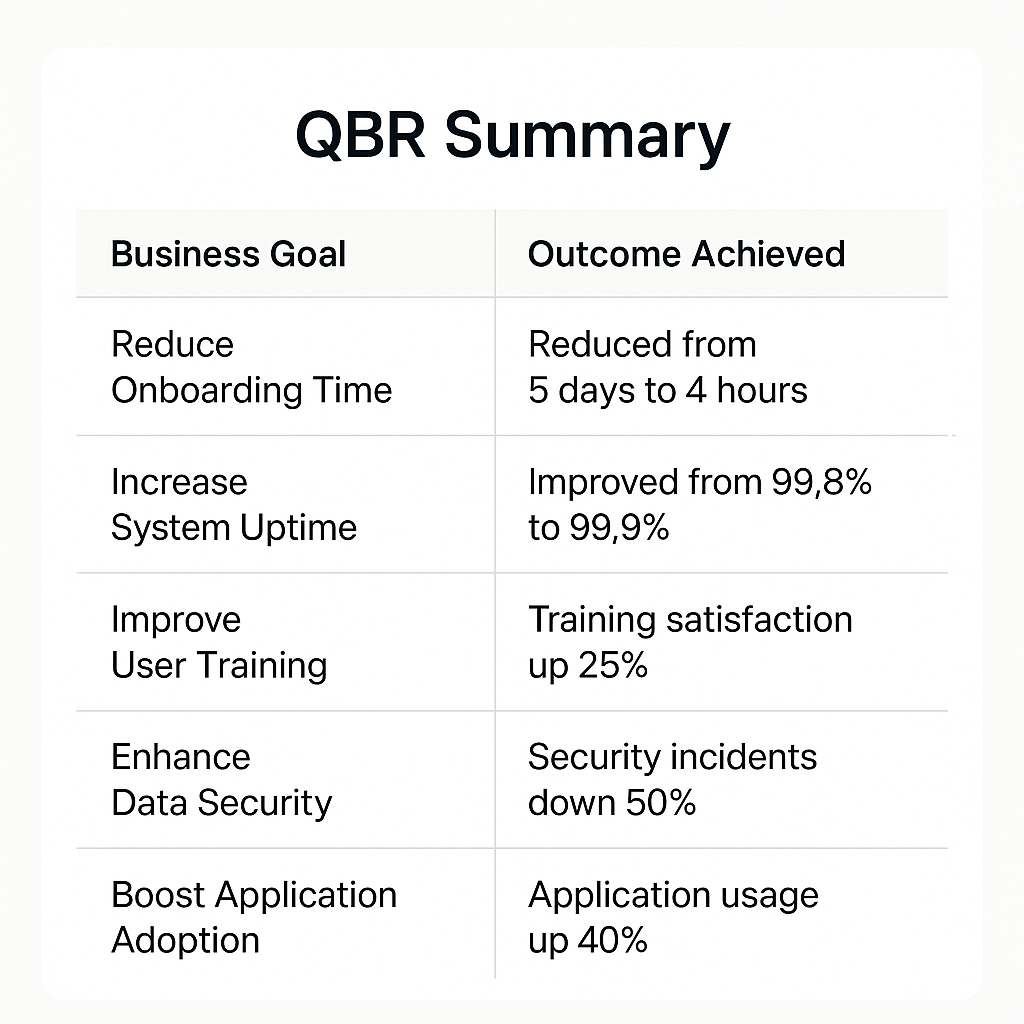
More: “We reduced repeat issues by X% and cut onboarding time for new hires by Y days.”
Less: “We upgraded your systems.”
More: “Your team can now complete this process in half the time.”
By centering the story on outcomes like productivity, risk reduction, and smoother workflows, MSPs make their value easier for non-technical executives to understand and defend internally.
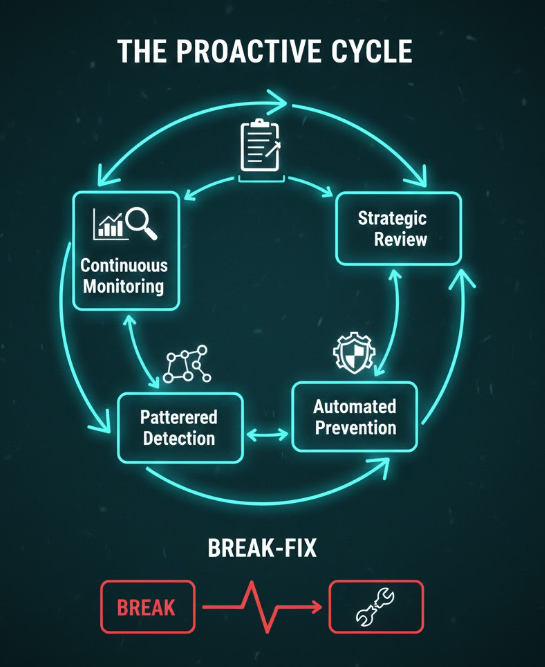
Why Proactive Workflows Beat Reactive Firefighting
This approach aligns with the industry-wide move toward Outcome-Based Service Models, as driven by customer demand for measurable results. Furthermore, the Transition from Break-Fix to Managed Service Provider models emphasize that proactive management is key to delivering this stability. For clients, proactive MSPs feel different. There are fewer surprises, fewer late-night calls, and fewer “we didn’t see this coming” moments. The MSP isn’t just reacting to incidents; it’s managing risk as an ongoing commitment. That reliability becomes a major differentiator when buyers compare providers that look similar on paper.
Aligning IT Services With Business Goals
Customer success insists on one thing: technology work must be anchored to business goals. MSPs that embrace this don’t start conversations with tools or tickets; they start with strategic questions. This consultative approach is the definition of the Rise of MSP 3.0, transforming the provider into a strategic business enabler.
Top MSPs ask:
What are your growth plans over the next 12–24 months?
Where are your teams slowed by manual work or fragmented systems?
What risks—operational, financial, or security—worry leadership most?
Once those answers are clear, the MSP can design roadmaps that tie specific projects to those goals. A security upgrade becomes “reducing breach risk to protect revenue and reputation.” A cloud migration becomes “enabling remote work and faster onboarding.” As emphasized in the State of Managed Services 2025, value-based pricing and services must be tied to these business outcomes rather than pure technical inputs.
This alignment makes it much harder for a competitor to displace you on price alone. If you are the MSP that understands where the business is heading—and your work clearly supports that direction—you become the strategic default.
Adoption: Where MSP Value Really Shows Up
In a customer-success-driven MSP, the question isn’t just “Did we deploy it?” but “Are people actually using it well?” Adoption is where most of the perceived value lives. As outlined in the 2025 MSP Business Trends Report, standardization and adoption are becoming key indicators of success. A collaboration tool that’s configured perfectly but barely used will feel like a waste. A security control that staff constantly bypass will feel like friction, not protection.
Customer-success-focused MSPs take ownership of adoption by:
Designing role-aware onboarding plans (leadership, managers, frontline staff).
Providing simple, accessible guides and SOPs tied to actual workflows.
Running short training loops and checking in on usage and sentiment.
Iterating workflows when they see confusion or resistance.
When users feel confident with their tools, frustration drops and trust rises. This focus on consultative engagement and improved onboarding is critical for those looking to Grow Their MSP Business in 2025. The MSP is no longer just the team that “installed stuff”; it becomes the team that helped the client’s people work better. That human-level impact is what executives remember at renewal time.
Measurable Outcomes as the New Language of Trust
Customer success gives MSPs a new language for talking about value: metrics that tie activity to outcomes. Instead of burying clients in logs and technical jargon, top MSPs surface a small, powerful set of indicators. According to the State of Customer Success 2025, these outcome-oriented KPIs are essential for guiding renewals and expansions.
Key indicators include:
Reduction in repeat incidents and noisy tickets.
Increase in adoption or usage of critical tools.
Time saved in key processes (e.g., onboarding, approvals, reporting).
Improved security posture (fewer vulnerabilities, better compliance).
Current Customer Success Industry Market Statistics show that leveraging these metrics allows teams to prove value and drive long-term growth. They shift the conversation from “What have you been doing?” to “Here’s what’s improved, and here’s what we’ll improve next.” Over time, this creates a narrative of continuous progress that’s easy for stakeholders to explain internally.
Structured Engagement: Making Success Repeatable
Customer success isn’t just a mindset; it’s a set of repeatable motions. MSPs that treat it as a competitive edge build structure around how they engage clients, so every account gets thoughtful, consistent attention instead of ad hoc check-ins.
That structure usually includes:
A clear onboarding program with expectations, milestones, and owners.
Regular health reviews that look at stability, adoption, and risk.
Scheduled business reviews focused on outcomes and roadmaps.
A simple system for capturing feedback and acting on it.
This rhythm does three things: it keeps the MSP close to the client, it surfaces issues early, and it makes value visible all year long—not just when contracts are up. As a result, renewals feel natural, not like a high-pressure renegotiation.
Why Customer Success Is Now the Strongest Differentiator
In a crowded MSP market, technical competence is rarely unique. Most providers can claim similar certifications, tools, and SLAs. What separates the leaders is how deeply they integrate customer success into their operating model. Leading firms identify Strategies to Drive MSP Business Growth specifically through this transition from reactive service to proactive business partnership.
MSPs that lean into customer success:
Retain more clients over longer periods, stabilizing recurring revenue.
See more natural expansion as trust and adoption grow.
Face less price pressure because they are clearly tied to business outcomes.
Build stronger referrals as clients share tangible success stories.
In other words, customer success turns your service from a commodity into a relationship and a strategy. It’s not a department on the side of the business; it’s the way the entire business thinks about serving and growing with clients.
Final Thoughts
The MSPs that win in 2025 are the ones that focus less on how many tickets they close and more on what their clients actually achieve. Customer success is the lens that makes that possible. By prioritizing user adoption, aligning with business goals, building proactive workflows, and making outcomes measurable, MSPs can move from being “the IT people” to being indispensable strategic partners.
Ready to stop reacting and start predicting?
See how Prioriwise turns your delivery data into a live Relationship Health Score for every client.
Get Started